Aboriginal Physics Newsletter
An inclusional worldview

A small plane runs out of fuel and attempts a landing on a busy freeway, the drivers in the freeway flow see the plane descending and open up a space for it to land. As the wind shifts, shifting the plane’s imminent point of ground contact, the organizing of the opening in the vehicle collective shifts, leaving an impression akin to that of an eagle herding cats, a phenomenon ‘half seen’ and ‘half felt’ as the ‘cat’s paw’ is to the sailor, an approaching ‘dark patch’ on the water that warns of imminent engaging with an invisible gyre of air turbulence.
We live in a dynamic space and our actions/behaviours in the unfolding present are naturally orchestrated by the continually transforming spatial relations we are uniquely, situationally included in. We experience the world as a ceaselessly, innovatively unfolding spatial-relational dynamic. Everything is in flux, and within the evolving flux, certain forms gather, persist for some time (we call this a ‘life-cycle’) and are re-gathered into the flux.
An observer who sees the plane land safely will report that; … “the drivers on the freeway moved aside so as to ‘clear a path’ for the plane to land”, … making the driver’s action sound very ‘rational’ and ‘deliberate’ as if the organization immanent in their collective behaviour had been calculated and executed by them, rather than being a manifestation of their; … “putting their behaviour in the service of sustaining spatial-relational harmony in the continually unfolding now”.
If one wishes to understand ‘organization’ in the social dynamic and/or in nature in general, one must acknowledge two different interpretations of the ‘source of organization’ in this unfolding where the freeway drivers opened up a clear space for the plane to land; (more…)

Theuth, the chameleon-God, is the ‘/’ between death/life, light/dark, logos/mythos
[N.B. For reading either before or after reading this essay, see the broader context-giving introduction. ]
The source of global social dysfunction, that is pointed to by all of my investigations, lies in our interpretation of this ‘/’, this ‘back-stretched connexion’ wherein we give meaning to conjugate relations such as habitat/inhabitant. That is, we can understand the ‘/’ in two different ways (a) simple something/nothing binary opposites, and/or, (b) spatially nested inclusion. (more…)

Friedrich Nietzsche (1844 - 1900) . . . . . . . . . . . . . . . . . . . . . . . . . . . . . . . Charles Darwin (1809 - 1882)
Since the era of Heraclitus and Parmenides (ca. 500 BCE) there has been contention over whether to seek to understand the world starting from the ‘One’ of ‘flow’ or from the ‘many’ of ‘material forms’ and ‘their’ behaviours, visualizing ‘them’ as ‘local entities in themselves’ that move, interact and change ‘their’ form in an absolute fixed and empty operating theatre (Euclidian space).
In the case of ‘flow’ where the universe is seen as a dynamic One-ness that is continually unfolding and infolding from and into itself, ‘local entities’ are inevitably ‘conjugate extrinsic-intrinsic dynamic relations undergoing a continual ‘becoming’ as in the relation between a whorl or convection cell in the flow (e.g. the hurricane in the flow of the atmosphere). The notion of ‘local being’ in this case is what Nietzsche would call a ‘useful fiction’, but the natural ‘physics’ of the situation is that these visible ‘flow-features’ are taking on form from their simultaneous mutual influence. This situation, which arises in celestial dynamics (gravitation), is mathematically insoluble in such a manner as would resolve the overall observed behaviour into individual local behaviours belonging to each of the participants. (more…)

belousov-zhabotinski reaction (simulated) where chaos and order meet
Our society, in answering the question ‘What is Life?’ has chosen to see ‘human being’ as a biological machine; a ‘local system with its own locally-originating, internal-process-driven behaviour’ that interacts with other such biological machines. We have been steadily building this bogus view of ‘What Life is’ into our systems of governance, justice, education and very man other things.
This is crazy. But, as my fellow inquirers who have come to the same or very similar conclusions note, the problem is not in defining ‘what is wrong’ with how we, as a social collective, have been answering the question ‘What is Life?’, but in getting others to consider it, since the path back to sanity (to a sane brotherhood) is through everyone coming to a common understanding on this. And here we have the problem that is often compared to the need to change the tires on a car while your driving it at 80 mph in the flow of the freeway. (more…)

the emperor's magic-shoe-powered projecting crown
There once was an Emperor who ruled the land and all that were in it with an iron fist. He was what you might call an ‘absolutist’. In his circle of courtiers was a wizard by the name of Notwen whose teachings, or at least the Emperor’s interpretations thereof, had had great influence on the Emperor’s social and political policies. There is a story that circulates within the land, that explains how it was that the Emperor came to think and rule in the absolutist manner that he did. It is a story that the people call ‘the Emperor’s new shoes’ and it tells the tale of how Notwen infused magic into these shoes, magic that gave the Emperor special powers and at the same time made it clear to him why authoritarian force was the ideal approach to organizing the activities of the people in his Empire. (more…)

the human body (hourglass form) as toroidal energy flow
I am not a mathematician, which is not to say that mathematics does not intrigue me, because it does. Women may intrigue a man without there having to be any correlation between deepening intrigue and ‘deepening understanding’. The deeper one goes in, the more confounded one can become. What you thought you already knew slips away from you in your attempt to grasp it more firmly (isn’t this what has happened in particle physics?).. The explicit being and interactions of numerical arithmetic dissolves into a phantom-filled fog of tacit relationship in algebra, and sharply-etched delineations of geometric form melt like Salvadore Dali clocks as one lets go of the rigidity ‘of being’ and moves to the relational invariants of ‘becoming’ in topology (how would you create a representation of what was invariant in your own human body going from infancy through to old age? The orifices are distinctive invariants, and the animated graphic above is the way that some ancient thinkers pictured the ‘continuous becoming’ of a human. The flesh is secondary, like a ‘biofilm’ that gather in the energy flow, as with the tubular shells of tubeworms that form in the flow of clouds of bacteria precipitating in the hydro-thermal ambiance of volcanic vents deep in the ocean.
Before getting lost in the maze, the point of this post is to open up a place for discussion on ‘symmetry’ and how it relates to ‘understanding’. (more…)
Submitted by emile on Sat, 2010-09-18 10:18.
Within communities, there have always been individuals who suffer from the learning disorder where they believe they ‘know it all’ and try to impose their ideas on others. They come to you with ‘their cup full and overflowing’ and your attempts to influence the discussion and/or the collective enterprise that they are advocating are met with , at best, a polite pause that allows them to catch their breath to continue on, without the slightest revision, other than as is necessary to keep you captive.
And amongst the diverse multiplicity of secular groups and religious communities, there have always been those communities that are collectively infected with this learning disorder where their behaviour is directed exclusively by internal knowledge/beliefs, their own private mission, vision, goals and objectives, who are not open to being shaped by the dynamics of the habitat in which they are situationally included, except insofar as such revision provides a means of furthering their own private agendas.
In the annals of history yet to be writ, who will later believe that there was once an entire global population that would embrace this learning disorder and weave it into the fabric of their daily lives? (more…)

"Life is what happens to you while you're busy making other plans."
Overview: The following article, ‘Anarchy and Order’ and subsequent discussion was published on the Anarchistnews.org website on July 20, 2010 and includes comments and discussion through to July 27, 2010. The last comment posted at that time was ‘Makes sense! Thanks’ by Squee on July 25, 2010.
This overview is to provide some contextual perspective (the article and discussion is copied ‘as is’ without edits) of where the author of the article is ‘coming from’ since the reader may otherwise ‘come in’ to the reading employing one or other of the very different definitions of ‘anarchism’ that are ‘out there’ in the mainstream media and/or in the intellectual writers forums.
To the author of the article, ‘anarchism’ may be compared directly with ‘decolonization’, a term used by indigenous peoples of North America (‘Amerindians’). The ‘decolonization’ movement (e.g. see Taiaiake Alfred’s video presentation at http://vimeo.com/4650972 ) [taiaiake starts speaking at the 10 min. 22 sec. mark]) orients to ‘the resurgence of traditional ways of being’. It has this in common with the ‘de-westernization’ that is implicit in ‘anarchism’. That is, the quest is for a way of life that is indicated by the Lakota words ‘Mitakuye oyasin’ (‘we are all related’, not just humans but.everything in Nature). This way of life is ‘backwards’ from our western urbanized or government organized way of life in that the organization is ‘extrinsically shaped’ by the dynamics of the space we are included in. For example, if one is in a sailboat in a storm, or driving a small car or motorcycle in the flow of the freeway, the spatial-relational dynamics we are included in extrinsically shape or individual and collective behaviour; i.e. ‘how we are organized’ is orchestrated from the outside-inward. By contrast, if one is on the Titanic and/or if one is in a semi-trailer or tank in the flow of the freeway, the organization is ‘intrinsic’ (directed from this inside-outward) and is deliberate intention/purpose driven.
In the west, since Aristotlelian ‘telos’ became dominantly popular; i.e. the belief that dynamics in nature are governed by ‘intrinsic final cause’ (e.g. the acorn is directed by its inner ‘purpose’ to become an oak tree), western intellectual/scientific man has conceived of himself as a ‘purposeful system’ (i.e. as having locally originating, internal purpose directed behaviour). This Aristotelian notion of the organism as a purposeful system has been built into western biology and into Darwin’s theory of natural selection. The ‘purposeful system’ view of humans and organisms is ‘over-simplied’ in that it ignores the extrinsic shaping influence that we experience in the dynamic space of nature. Nature, as we experience it in ‘real-life’, is ‘purposeless’ (anarchic); i.e. it is a ceaselessly innovative unfolding field of spatial-relationships in which we are each uniquely situationally included. In its entirety, there is no ‘encoding of what Nature is going to become, nor is there any ‘local internal purpose’ directing its unfolding (Nature is not one ‘giant acorn’ knowledgeably pushing out of itself on its way to becoming a ‘giant oak tree’). But western intellectual scientific thinking (the mainstream or popular variety which we build into our institutions::education, governance, justice) has locked-on to the purposeful system model of Aristotle, and imposes it on the individual ‘members’ of the ‘organization’ (the state, corporation, membership club etc.) The social ramifications are huge. As McLuhan pointed out, the purposeful system orientation blinds us to what is really going on. While we purposefully focus on constructing a factory in a small town (where ‘labour’ and ‘materials/resources’, the ‘factors of purposeful production’ are available), it matters little whether this purposeful system makes “Cadillacs or cornflakes”, what matters is how our relationships with one another and with the land are transformed. It’s not that we shouldn’t have technology, its just whether we should put ‘Mitakuye oyasin’ first as the orchestrator of our behaviours, or whether we should ignore it as is the current western way; i.e. our ‘western ethic’ is to focus purposefully on achieving our self-interested objectives/destinations. ‘Decolonization’ and ‘anarchism’ are both to do with ‘restoring to its natural primacy, the ethic of Mitakuye oyasin’. ‘Decolonization’ and ‘anarchism’ implicitly represent the resurgence of natural ways of being, the ‘reconnecting’ in the wake of western ‘disconnecting’. The traditional ‘connected way’ can still be found in the ‘spandrels’, those spaces which form ‘in between’ the arches and supportive beams of a deliberate and purposeful architecture, but as purposeful structures increasingly ‘take over’, the last of the spandrels in which the practitioners of Mitakuye oyasin can ‘breathe easy’ are being eliminated.
* * * Start of ‘Anarchy and Order’ Article * * * (more…)

growth-of-form being shaped by its own back-pressure
This note is designed to serve as a simple ‘thinking tool’, to remind that there are two ways of visualizing the dynamic behaviour of matter (the dynamics of form and organization) and two ways of understanding the role of space in these dynamics (participating and non-participating), yielding three different ways to contemplate the meaning of any dynamic. The choices we make impact our sense of ‘self’ and ‘society’ and shape our manner of engaging with/in the world dynamic. (more…)
A restoring of extrinsic attuning over intrinsic asserting?
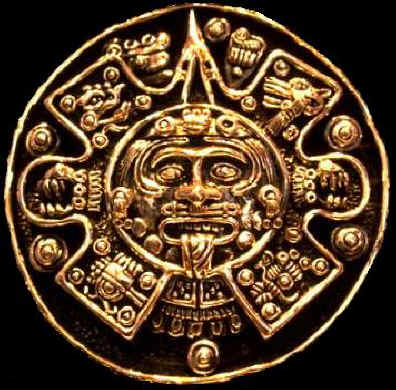
The Mayan prophecy that a 5,125 year cycle will give way to a new cycle on December 21, 2012 has been stirring increasing interest as the date approaches. It excites us to think that we could experience both sides of a ‘turning point’ where our globally pervasive beliefs undergo a radical shift. What was it like to have straddled the flip from the belief that the earth was the centre of the universe to the belief that the earth was one of several planets that circled the sun? What was it like to have straddled Newton’s ‘discovery’ of ‘laws of motion’ that opened a door into a new industrial age? (more…)
Most Recent Comments